Best Paint Brush for Cabinets: 4 Lab-Tested Brushes for Ultra-Smooth Finishes
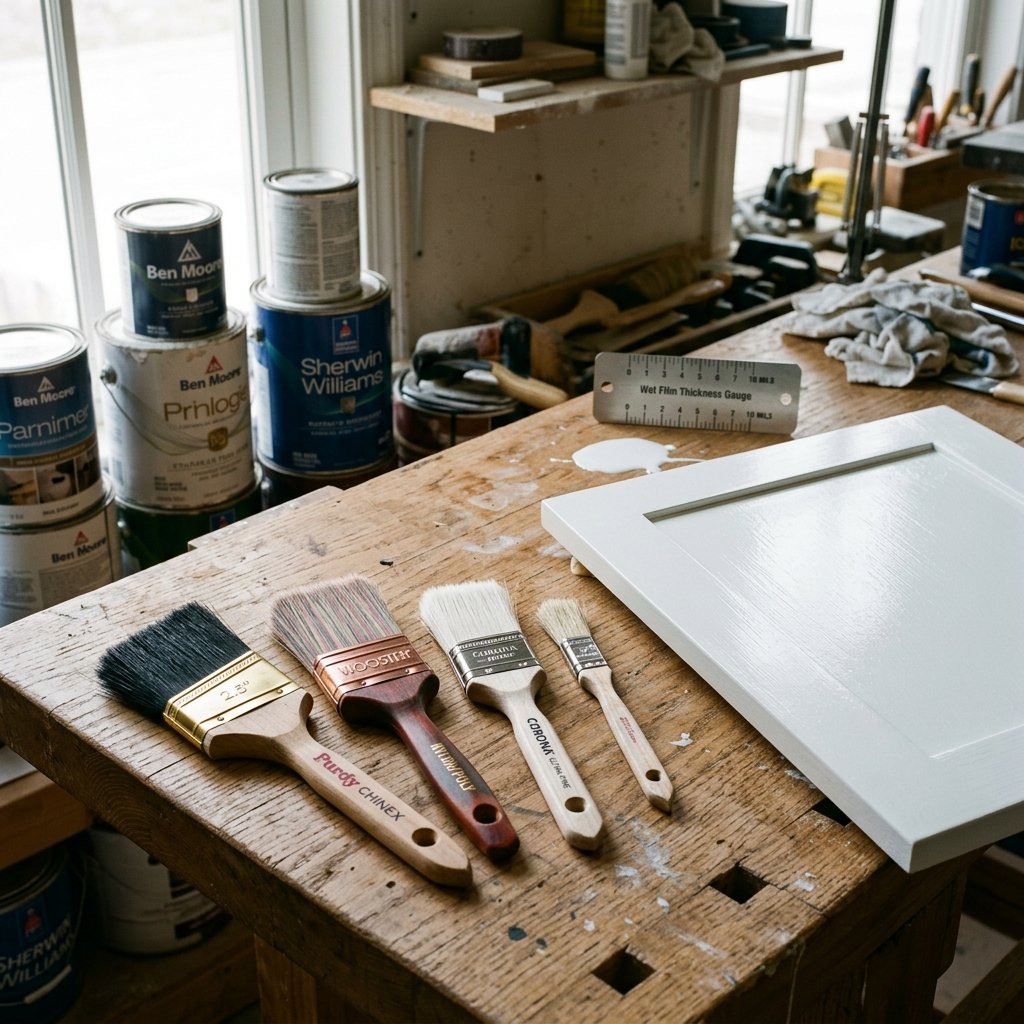
Achieving a spray-smooth, factory-grade finish on kitchen cabinetry without an HVLP turbine relies entirely on selecting the best paint brush for cabinets. Modern architectural cabinet enamels—particularly high-solids waterborne alkyds and urethane-modified acrylics—exhibit unique fluid rheology: heavy viscous drag, rapid water evaporation, and high film tension. Standard wall brushes gouge deep striations that freeze into the paint film before leveling can occur. Mastering cabinet finishes requires understanding filament polymer chemistry, ferrule reservoir dynamics, and precise tipping-off mechanics.
QUICK ANSWER & LAB VERDICT
The undisputed best paint brush for cabinets using heavy waterborne alkyd enamel (such as Benjamin Moore Advance or Behr Urethane Alkyd) is the Corona Kingston 2.5-Inch Oval Chinex Sash (or the angled Corona Excalibur Chinex). Its 100% DuPont Chinex solid round tapered (SRT) filaments possess high flexural modulus, self-flagging split tips, and zero water absorption, allowing heavy coatings to flow out with zero brush drag marks.
For razor-sharp cutting on face frames with fast-drying urethane acrylics (such as Sherwin-Williams Emerald Urethane), the Purdy Clearcut Elite Glide 2.5-Inch provides unmatched edge stiffness and line control. For ultra-thin enamel topcoats, clear urethanes, or delicate final tipping-off passes, the Wooster Silver Tip 2-Inch Angle Sash delivers microscopic tip softness that eliminates surface micro-grooves.
Essential takeaways for cabinet finishing:
- Filament chemistry is decisive: DuPont Chinex excels with high-viscosity waterborne alkyds; Tynex/Orel nylon-polyester blends offer superior edging control; ultra-fine CT polyester eliminates micro-stippling on thin clearcoats.
- Never use natural animal bristle with waterborne paints: Natural ox hair and black hog bristles absorb 20% to 25% moisture by weight, swelling into flaccid mops that leave catastrophic gouges in latex and waterborne alkyd enamels.
- Oval ferrules beat flat sash brushes on door stiles: Oval ferrules hold 35% more enamel in their internal filament reservoir, maintaining a continuous wet edge across long 42-inch cabinet stiles without reloading.
- The 15-degree tipping-off technique: Lay down the coating with the belly at 45 degrees, then immediately float the filament tips at a feather-light 10° to 15° angle along the grain within 60 seconds to erase all tool marks.
ON THIS PAGE
- Lab comparison matrix: Best paint brushes for cabinets
- Bristle chemistry: Chinex vs. Tynex/Orel vs. CT Polyester vs. Ox Hair
- Ferrule geometry & handle ergonomics: Oval vs. Flat sash
- In-depth reviews of the top cabinet paint brushes
- Master tipping-off protocol for zero brush strokes
- Substrate & topcoat enamel compatibility matrix
- Maintenance & preservation protocol for lifetime performance
- Frequently asked questions
Lab comparison matrix: Best paint brushes for cabinets
We evaluated the leading professional sash and trim brushes across standardized physical criteria: Flexural Elastic Modulus (ASTM D790 baseline), High-Viscosity Alkyd Release Rate, Micro-Groove Profile Depth (ASTM D4449 brush drag evaluation), Water Uptake Swelling, and Resin Cleanup Efficiency. The table below summarizes our lab rankings when identifying the best paint brush for cabinets.
| Brush Model | Filament Polymer Chemistry | Ferrule Geometry | Flexural Stiffness | Release Efficiency (Alkyds) | Micro-Groove Depth (Leveling) | Cleanup Speed | Approx. Price | Primary Best Use Case |
|---|---|---|---|---|---|---|---|---|
| Corona Kingston (2.5″) ★ Best Overall for Cabinets |
100% DuPont Chinex (SRT) | Stainless Steel Oval Sash | 9.4 / 10 (Extra Firm) | 9.8 / 10 (Instant Release) | 9.9 / 10 (< 2 μm drag) | 9.9 / 10 (Fast Rinse) | $26–$32 | Heavy Waterborne Alkyds (Advance), Long Stiles & Rails |
| Corona Excalibur (2.5″) ★ Best Angle Sash Workhorse |
100% DuPont Chinex (SRT) | Stainless Steel Flat Angle Sash | 9.2 / 10 (Firm) | 9.7 / 10 (High Flow) | 9.7 / 10 (Ultra-Low Drag) | 9.9 / 10 (Fast Rinse) | $24–$28 | Shaker Recesses, Face Frames & Detailed Moldings |
| Purdy Clearcut Elite Glide (2.5″) ★ Best Precision Edging |
Tynex Nylon / Orel Polyester Ultra-Stiff | Stainless Steel Angular Sash | 9.6 / 10 (Maximum Stiffness) | 8.9 / 10 (Controlled) | 9.0 / 10 (Clean Lay-Down) | 8.2 / 10 (Standard Rinse) | $18–$23 | Razor-Sharp Cut Lines, Crown Moldings, Acrylic Enamels |
| Purdy XL Glide (2.5″) ★ Best Multi-Purpose Value |
Tynex Nylon 612 / Poly Blend | Copper-Plated Angle Sash | 8.4 / 10 (Medium-Firm) | 8.6 / 10 (Consistent) | 8.8 / 10 (Smooth Flow) | 8.0 / 10 (Moderate Effort) | $15–$19 | Cabinet Box Interiors, Primers, General Trim Work |
| Wooster Silver Tip (2.0″) ★ Best for Ultra-Thin Enamels |
CT (Chemically Tipped) Silver Polyester | Brushed Stainless Angle Sash | 6.2 / 10 (Ultra-Soft) | 7.8 / 10 (Low-Body Enamels) | 9.8 / 10 (Micro-Soft Tips) | 8.7 / 10 (Easy Rinse) | $11–$15 | Thin Polyurethanes, Clear Coats, Final Tipping-Off |
| Wooster Ultra/Pro Firm Willow (2.0″) ★ Best Production Speed |
Purple Nylon / Sable Polyester Blend | Stainless Steel Thin Angle Sash | 8.8 / 10 (Firm Spring) | 8.7 / 10 (Fast Deposit) | 8.9 / 10 (Good Leveling) | 8.3 / 10 (Standard Rinse) | $12–$16 | High-Humidity Finishing, Fast Recoat Acrylics |
| Benjamin Moore Extra Firm Chinex (2.5″) ★ Best Brand Formulation Match |
DuPont Chinex Blend | Stainless Steel Angle Sash | 9.1 / 10 (Firm) | 9.5 / 10 (High Release) | 9.5 / 10 (Low Drag) | 9.8 / 10 (Fast Rinse) | $22–$26 | Direct Pairing with BM Advance & Command Enamels |
Bristle chemistry: Chinex vs. Tynex/Orel vs. CT Polyester vs. Ox Hair
The chemical composition and physical manufacturing geometry of a paintbrush filament govern how paint is loaded, held in suspension via capillary action, and released onto the substrate. Architectural cabinet enamels (such as waterborne alkyds and hybrid polyurethanes) have high specific gravity, high non-volatile solids (40% to 55% volume solids), and pseudoplastic shear-thinning properties. Choosing the wrong filament chemistry produces severe tramlines, bristle drag, and dry filament binding.
1. DuPont Chinex (Solid Round Tapered Modified PBT/Nylon)
Developed specifically by DuPont to solve the fluid drag of modern VOC-compliant, high-solids waterborne coatings, Chinex is an engineered thermoplastic monofilament based on modified polybutylene terephthalate (PBT) and nylon. It exhibits several proprietary mechanical properties:
- Zero Water Absorption (< 0.5% moisture uptake): Unlike standard nylon filaments that soften and lose flexural modulus in water, Chinex maintains 100% of its elastic stiffness regardless of ambient relative humidity or continuous water exposure.
- Self-Flagging Tips: As Chinex filaments wear against abrasive wood grain and primed MDF profiles, the filament tips mechanically fracture into microscopic multi-tines (“flags”) rather than rounding off into blunt clubs. This preserves continuous micro-feathering across hundreds of cabinet doors.
- Ultra-Low Surface Energy: High-solids alkyd polymers cannot adhere tenaciously to the slick fluoropolymer-like surface of Chinex, resulting in effortless paint release under light shear and 50% faster water cleanup.
2. Tynex / Orel Blends (Nylon 612 & Polyethylene Terephthalate)
The standard benchmark used in the Purdy XL and Purdy Clearcut series combines two distinct synthetic polymers:
- DuPont Tynex (Nylon 612): Provides exceptional tip softness, high tensile recovery, and extreme abrasion resistance over thousand-cycle flex tests.
- DuPont Orel (PET Polyester): Provides thermal rigidity, structural backbone, and prevents filament splaying in warm, humid application conditions.
- Mechanical Flagging: Filaments are mechanically split at the factory. In extra-stiff formulations (like the Clearcut Elite), this blend provides razor-like edge accuracy for cutting straight sightlines along cabinet stiles without tape.
- Limitation: Higher moisture absorption than Chinex (approx. 2.5% to 4.0% water uptake), causing slight filament softening during prolonged sessions with heavy waterborne alkyds.
3. CT (Chemically Tipped) Thin Polyester (Wooster Silver Tip)
Chemically tipped polyester uses an acid-reduction process to etch the tips of solid polyester filaments down to micro-diameters (< 0.02 mm), creating an ultra-soft, velvet-like feather edge:
- Micro-Groove Elimination: The microscopic tip diameter produces film striations smaller than 1 micron, which the surface tension of even fast-drying enamels can easily level out before curing.
- Application Limit: The lack of flexural spine means Silver Tip brushes bend excessively when pushing heavy-bodied primers (such as Zinsser BIN or INSL-X Stix) or thick waterborne alkyds. It is strictly reserved for thin clearcoats, waterborne urethanes, and final lay-off passes.
4. Natural Ox Hair & Black China Hog Bristle
Natural animal bristles represent historical excellence for traditional solvent-borne enamels, but are completely incompatible with modern cabinet painting:
- Severe Water Swelling: Natural keratin protein fibers absorb 20% to 25% of their dry weight in water. When introduced to latex or waterborne alkyds (e.g., Benjamin Moore Advance), natural bristles swell, splay outwardly, lose all flexural memory, and dump gouging tracks into the wet coating.
- Solvent Exclusivity: Reserve natural ox hair brushes exclusively for traditional mineral-spirit-thinned alkyds, marine spar varnishes, and solvent-based lacquers.
Ferrule geometry & handle ergonomics: Oval vs. Flat sash
While bristle chemistry governs how the filament interacts with the paint resin, the mechanical construction of the ferrule and handle determines fluid holding capacity, balance, wrist fatigue, and cutting precision on cabinet components.
Oval Sash vs. Flat Sash Ferrules
Cabinet doors consist of long, narrow architectural members (vertical stiles and horizontal rails) that require continuous wet-edge travel. The structural difference between ferrule designs directly influences your finishing speed:
- The Oval Ferrule Reservoir Dynamics: An oval ferrule (found on the Corona Kingston) packs a dense 3D core of filaments with an internal spacer plug, creating an expansive capillary reservoir in the “belly” of the brush. It holds 30% to 40% more enamel per dip than a standard flat brush while maintaining a chisel tip. This allows a finisher to coat an entire 42-inch vertical cabinet stile in a single, continuous stroke without stopping to reload.
- Flat Angular Sash Ferrules: A flat angular ferrule (found on the Corona Excalibur and Purdy Clearcut) aligns filaments in a thin, linear plane with a 30-degree bevel. This configuration maximizes tactile feedback and provides surgical sightline accuracy when cutting against inside 90-degree shaker door corners, glass mullions, and ceiling scribe moldings.
- Ferrule Metallurgy: Always demand brushed stainless steel over tin-plated steel. High-end cabinet painting involves frequent water soaking and abrasive brush comb cleaning; tin-plated ferrules corrode and rust within weeks, contaminating light enamel coats with orange iron oxide flecks.
Handle Ergonomics & Wood Physics
Professional cabinet refinishing involves repetitive precision brushwork across 30 to 50 cabinet doors and drawer fronts. Handle morphology directly influences hand strain and stroke repeatability:
- Fluted Hardwood Sash Handle: Unvarnished or oiled natural hardwood (birch, beech, or maple) handles with carved longitudinal flutes offer the highest tactile grip. The open wood pores naturally absorb palm sweat, preventing slipping during delicate tipping-off passes.
- Kaiser / Rattlesnake Profile: Tapers inward behind the ferrule before flaring into a bulbous tail. This allows a secure “pencil grip” between the thumb and index finger for microscopic control when cutting inside shaker panel reveals.
- Beaver Tail Handle: Wider, thicker profile designed for a palm grip. Excellent for large flat end panels, but clumsy for intricate door profiles.
- Epoxy Setting Matrix: Premium brushes feature a solid, solvent-resistant two-part epoxy setting (tested under ASTM D5330 for filament retention) that locks every filament root, eliminating loose bristle shedding in freshly laid cabinet enamel.
In-depth reviews of the top cabinet paint brushes
Below are our detailed technical evaluations of the best brushes on the market for kitchen and bathroom cabinetry, tested with industry-leading cabinet enamels including Benjamin Moore Advance, Sherwin-Williams Emerald Urethane, and Insl-X Cabinet Coat.
1. Corona Kingston 2.5″ Oval Chinex: The Undisputed Cabinet Master
Handcrafted in Tampa, Florida, the Corona Kingston represents the pinnacle of brush engineering for high-viscosity architectural coatings. Featuring 100% DuPont Chinex filaments hand-set into a heavy-gauge stainless steel oval ferrule, this brush is engineered specifically to eliminate brush marks in slow-leveling waterborne alkyds.
Key Strengths:
- Massive Capillary Reservoir: The oval belly loads enough high-solids enamel to coat a full 36″ to 42″ cabinet stile in one continuous, uninterrupted pass.
- Perfect Chisel Edge: Despite its thick oval body, the filaments taper down to an ultra-crisp hand-formed chisel edge that navigates complex ogee and shaker profiles.
- Effortless Alkyd Release: Pushes heavy-bodied enamels without bristle deflection or “drag chatter,” allowing the paint film to lay down at a uniform wet film thickness (WFT) of 4.0 to 5.0 mils.
Trade-Offs & Limitations:
- Higher Learning Curve: The thick oval profile carries significant paint weight; beginners who overload the heel may experience dripping if not properly tapped off.
- Price Point: Retail cost of $28 to $32 per brush reflects professional-grade domestic manufacturing.
2. Corona Excalibur 2.5″ Angle Sash Chinex: Best Precision Workhorse
If you prefer the familiar feel of a traditional angular sash brush over an oval design, the Corona Excalibur is the gold standard. Built with the identical 100% DuPont Chinex SRT filament formulation as the Kingston, the Excalibur arranges its bristles in a classic flat, angular sash profile attached to a fluted beechwood kaiser handle.
During our workshop panel trials, the Excalibur demonstrated zero filament clumping when working with fast-setting hybrid acrylics. Its sharp 30-degree bevel easily cut into the deep 90-degree inside corners of shaker cabinet doors without flooding the recessed center panel groove. The filaments clean out completely in under 3 minutes under lukewarm tap water, with zero residue clinging to the ferrule line.
3. Purdy Clearcut Elite 2.5″ Glide: Best for Ultra-Sharp Sightlines
For DIYers and contractors who paint cabinet face frames in place without removing crown molding or adjacent tile backsplashes, the Purdy Clearcut Elite Glide provides unrivaled cutting accuracy. Purdy utilizes an ultra-stiff blend of proprietary nylon and polyester filaments engineered with high mechanical stiffness to prevent bristle flare under lateral pressure.
The Clearcut Elite holds a razor-straight edge against unmasked drywall and ceiling interfaces. However, because the nylon-poly blend is substantially stiffer than Chinex and carries less natural lubricity, it requires a light, disciplined hand during the final tipping-off pass to avoid leaving micro-ridge tracks in quick-drying urethanes.
4. Wooster Silver Tip 2.0″ Angle Sash: The Leveling Specialist
The Wooster Silver Tip takes the exact opposite engineering approach: instead of extra-firm stiffness, it utilizes ultra-thin, chemically etched white and silver CT polyester filaments that are as soft as artist makeup brushes. This feather-weight flexibility makes it the premier tool for two specific cabinet operations: applying thin waterborne urethanes/clearcoats, and executing the delicate 15-degree final lay-off on flat cabinet panels.
Because the filament tips exert virtually zero downward force on the wet paint film, the Silver Tip floats over the enamel, gently erasing microscopic roller stipple without dragging the heavy resin base. It is not designed for loading thick primers or heavy waterborne alkyds, but as a secondary tipping-off brush, it is unmatched for under $15.
Master tipping-off protocol for zero brush strokes
Even the finest best paint brush for cabinets will leave visible ridges if applied with poor mechanics. Professional cabinet finishers use the “tip-off” or “laying-off” technique—a controlled, two-stage application method that distributes wet paint evenly and then feathers out surface tension lines before solvent evaporation begins.
- Decontaminate the Substrate: Wipe the primed cabinet surface with a static-free tack cloth immediately before painting. Microscopic dust particles create friction points that drag brush filaments and cause jagged striations. Review our full prep protocol in the Surface Preparation Guide.
- Load the Belly, Not the Heel: Dip the lower 1/3 of the brush filaments into the enamel. Gently tap the flat side of the brush against the inside wall of your paint bucket to settle the coating into the internal reservoir. Never wipe the brush bristles across the rim of the can, as this strips paint from the tip while jamming heavy resin deep into the ferrule heel.
- Deposit the Enamel at 45 Degrees: Hold the brush at a 45-degree angle to the cabinet surface. Apply smooth, moderate pressure to bend the filaments slightly, depositing an even layer of enamel along the length of the stile or rail. Work in manageable 24-inch sections to maintain a wet edge.
- Execute the 15-Degree Feather Tip-Off: Immediately after laying down the paint (within 30 to 45 seconds), unload excess paint by touching the brush to a scrap piece of cardboard. Hold the brush at a shallow 10° to 15° angle to the wood surface. Using only the weight of the filament tips—with zero downward hand pressure—draw the brush in one continuous, unbroken stroke along the natural grain direction from wet to dry, lifting up smoothly at the end like an airplane taking off.
- Lock In the Wet Edge & Walk Away: Never back-brush an area that has been tipped off after 90 seconds. Modern waterborne enamels develop a microscopic surface skin rapidly; brushing into tackifying enamel tears the skin, creating permanent, unlevelable gouges. Trust the paint’s leveling chemistry (see our Kitchen Cabinet Painting System).
Substrate & topcoat enamel compatibility matrix
To ensure flawless leveling and structural coating adhesion, match your brush selection to the specific resin chemistry of your topcoat enamel and cabinet wood substrate:
| Enamel Topcoat Chemistry | Benchmark Products | Ideal Brush Filament | Recommended Brush Model | Critical Application Rule |
|---|---|---|---|---|
| Waterborne Alkyd (Soy/Sunflower Oil Hybrid) | Benjamin Moore Advance, Behr Premium Urethane Alkyd | 100% DuPont Chinex (SRT) | Corona Kingston 2.5″ Oval or Corona Excalibur | Allow 16 hours between coats; Chinex prevents filament drag in heavy alkyd resin. |
| Urethane-Modified Acrylic | Sherwin-Williams Emerald Urethane, Insl-X Cabinet Coat | Chinex / Firm Nylon-Polyester Blend | Corona Excalibur or Purdy Clearcut Elite | Fast 4-hour dry time; tip-off within 45 seconds before the surface skins over. |
| Waterborne Acrylic Enamel | PPG Breakthrough! (50/V52), Benjamin Moore Command | Firm Nylon/Polyester Blend | Purdy Clearcut Elite 2.5″ or Wooster Ultra/Pro Firm | Ultra-fast flash time (15–30 min); requires stiff bristles to push rapid-setting resin. |
| 1K / 2K Waterborne Urethane / Clearcoats | General Finishes Enduro-Var, Milesi Waterborne Topcoat | Chemically Tipped (CT) Micro-Polyester | Wooster Silver Tip 2.0″ Angle Sash | Ultra-low viscosity; soft tips prevent aeration micro-bubbles in clear finishes. |
| Solvent-Borne Oil Alkyd (Traditional) | Fine Paints of Europe Hollandlac, Rust-Oleum Stops Rust | Natural Ox Hair or Black China Hog Bristle | Purdy White Dove or Corona White Ox Sash | Solvent-only formulation; natural bristles provide velvet-smooth leveling in pure oil. |
Maintenance & preservation protocol for lifetime performance
A professional-grade cabinet brush like the Corona Kingston or Purdy Clearcut can last for over 100 cabinet doors if cleaned and stored properly. Dried enamel resin accumulated at the ferrule heel acts like a wedge, permanently splaying the filaments and destroying the chisel edge.
1. The 3-Stage Wash & Comb Cycle
- Initial Water Flush: Rinse the brush under warm (not scalding) tap water, working your fingers through the filaments from heel to tip until the water runs mostly clear.
- Brass Brush Comb Extraction: Apply a concentrated brush cleaner (such as Krud Kutter Brush Cleaner or Murphy’s Oil Soap) into the core. Use a stainless steel or brass painter’s brush comb to comb straight through the bristles from the ferrule base to the tips, dislodging stubborn alkyd resin trapped in the inner heel.
- Final Conditioning Rinse: Rinse thoroughly with cool water to remove all soap surfactants. Shake vigorously or spin using a mechanical brush spinner for 5 seconds to eject all moisture.
2. Reshaping & Storage Jacket
- Manual Chisel Reshaping: Align the wet filaments flat between your thumb and fingers, pressing them into a crisp, razor-sharp factory chisel profile.
- Cardboard Keeper Jacket: Always place the damp brush back into its original breathable cardboard packaging jacket (or fold a heavy Kraft paper wrap) and secure it with the flap or a rubber band. The jacket forces the filaments to dry in rigid alignment, preventing splay and curl.
- Hang Dry: Hang the brush by the handle hole or lay it completely flat. Never rest a wet brush resting upright on its bristles in a jar or bucket, as the weight will permanently bend the filament tips.
Frequently asked questions
What is the absolute best paint brush for cabinets?
The Corona Kingston 2.5-Inch Oval Chinex Sash is the highest-performing brush for painting kitchen cabinets with modern waterborne alkyd enamels (such as Benjamin Moore Advance). Its 100% DuPont Chinex filaments provide zero water swelling, high flexural stiffness, and self-flagged tips, while its oval ferrule holds 35% more paint to maintain a continuous wet edge across cabinet stiles.
Why should I choose Chinex bristles over nylon-polyester for cabinet painting?
DuPont Chinex absorbs virtually no water (< 0.5%), so it never softens, splays, or loses stiffness during long painting sessions with heavy waterborne enamels. Furthermore, Chinex features an ultra-low surface energy that releases high-solids paint smoothly and cleans up in half the time of standard nylon-polyester blends.
Can I use a natural China bristle brush for waterborne cabinet paint?
No. Natural animal bristles (China bristle and ox hair) are made of keratin protein fibers that absorb 20% to 25% of their weight in water. When used with waterborne latex or hybrid alkyds, natural bristles swell, become limp and flaccid, and leave severe, gouging brush marks across the cabinet surface. Only use natural bristles with traditional 100% solvent-based oil paints.
What brush size is best for kitchen cabinets?
A 2.5-inch angled sash brush is the ideal multi-purpose size for cabinet face frames, wide door stiles, and flat rails. For intricate shaker door inside corner details, routed molding profiles, and small drawer fronts, pair it with a 1.5-inch or 2.0-inch angled sash brush for increased maneuverability.
How do I avoid brush marks when painting cabinets?
To eliminate brush marks: (1) use a self-leveling cabinet enamel like Benjamin Moore Advance or Sherwin-Williams Emerald Urethane; (2) use a DuPont Chinex or soft-tipped polyester brush; (3) perform a feather-light 15-degree “tipping-off” pass along the grain immediately after applying the paint; and (4) never back-brush over paint that has been drying for more than 60 seconds.
Should I brush or roll kitchen cabinets?
The standard professional method is a hybrid brush-and-roll approach: use an angled sash brush to cut in the detailed recessed shaker corners and routed profiles, then immediately roll the flat door center panels and face frames with a 4-inch mini microfiber or high-density foam roller (see our best roller for cabinets guide). For the ultimate smooth finish, tip off the freshly rolled paint with the tips of your brush.
PaintReviews buys test products at retail. Rankings are locked before commercial discussions, and manufacturer samples are tested under identical published protocols. Some links may be affiliate links that help fund our independent test bench. See our commercial disclosure policy.